


It always starts the same way
You check your results and feel that familiar knot in your stomach.
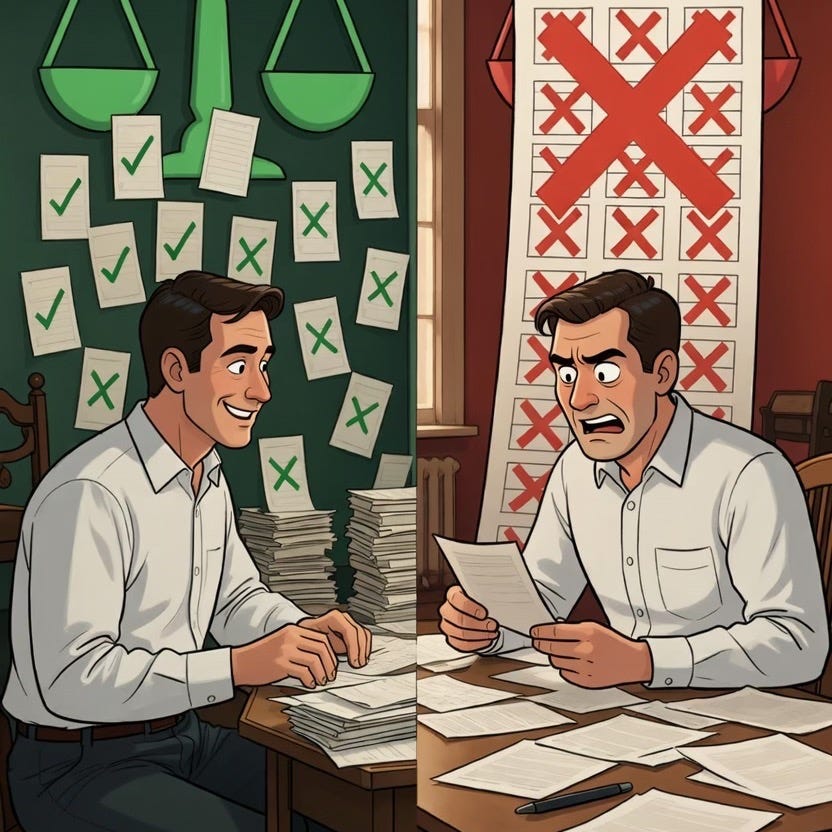
The small bets are green.
The ones you half-liked, half-forgot about, somehow got the job done.
And then you scroll.
There it is again.
The “best bet.”
The one you circled, trusted, and sized up.
Lost.
Not just lost either. Lost well. Outshot. Match points missed. Red cards. Late goals. The kind of loss that makes the stats page feel like it is mocking you.
At some point, you stop thinking “this is unlucky” and start thinking:
Am I doing something wrong?
That question is where most bettors either improve or spiral.
When confidence feels bigger than it really is
Here is the uncomfortable truth most of us avoid.
The gap between a bet you like and a bet you love is usually tiny.
But the way we stake them makes that gap feel massive.
In your head, it sounds like:
“This one is decent.”
“This one is clearly my best bet.”
In reality, the difference might be one extra shot, one injury doubt, one price drift.
That is not a canyon.
It is a crack.
Yet the stake often jumps from something sensible to something aggressive.
And when the aggressive one loses, it does not just hurt your bankroll. It hurts your confidence.
The moment you realise it is not just bad luck
Bad luck happens. Everyone knows that.
But there is a specific pattern that should make you pause:
Your overall picks are close to break even or slightly positive
Your big bets are dragging everything down
Your smaller bets are quietly doing their job
That is not chaos. That is structure.
It usually means your decision making is fine, but your staking is exaggerating your mistakes.
You are falling off what I like to call the confidence cliff.
Life on the confidence cliff
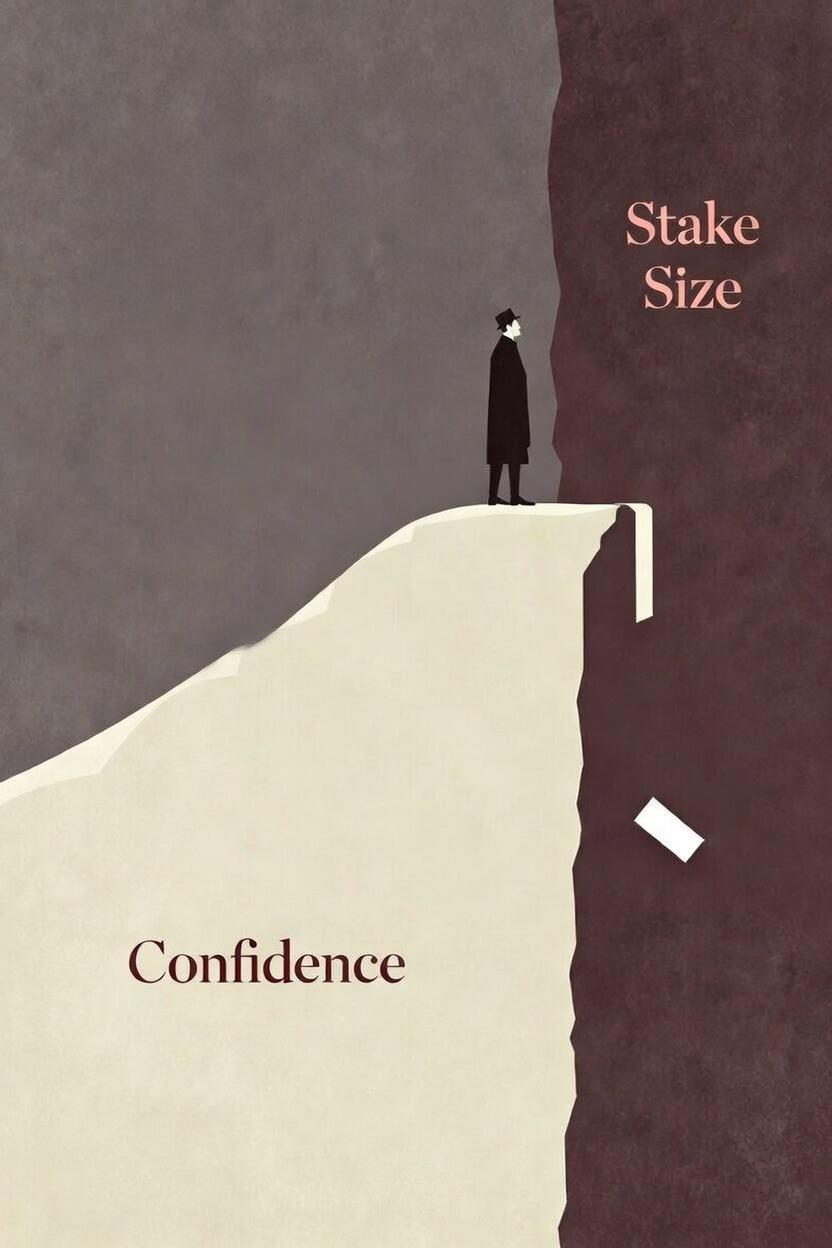
The confidence cliff is where bettors live when they use labels instead of probabilities.
Lean.
Best bet.
Strong play.
Those words feel harmless, but they come with emotional weight.
Once you call something your best bet, your brain starts justifying why it deserves more money.
You stop asking:
“Is this much better?”
And start telling yourself:
“This has to win.”
That is a dangerous shift.
The boring fix that actually works
There is no magic system here.
The fix is painfully unsexy.
Stop making big jumps.
If two bets feel close, stake them close.
That is it.
Instead of:
Small bet
Medium bet
Huge bet
You want:
Slightly smaller
Slightly bigger
Slightly bigger again
Smooth edges, not cliffs.
When you do this, losing still hurts. But it stops wrecking your week.
Why the small bets feel “smarter” after the fact
Here is a funny thing.
The bets you stake small often feel clearer in hindsight.
That is because you were calmer when you made them.
No pressure to be right.
No need to defend them emotionally.
No urge to force the outcome.
You saw the price, liked it enough, and moved on.
Your big bets rarely get that treatment.
They get stories.
They get narratives.
They get emotionally upgraded.
And emotion is expensive.
The timing trap nobody warns you about
Another part of the frustration comes from when bets are placed.
Some markets reward early opinions. Others punish them.
Tennis is fragile. One small piece of information can flip a match. If you are good at spotting those edges, early betting can make sense.
Football is noisy. Prices often look “wrong” days before kickoff because half the information is missing. Late markets are sharper, but they also overreact.
The mistake is pretending one rule fits everything.
When you bet at the wrong time and oversize the stake, you double the pain.
The hedging fantasy
Every bettor has this moment.
You watch your team dominate.
The price crashes.
You think: “I could lock this in.”
Then it loses.
Your brain immediately rewrites history:
“I should have hedged.”
But hedging to avoid emotional pain is rarely profitable long term.
The healthier habit is simpler.
When the game changes, pause and ask:
“If this was a fresh bet right now, would I take it?”
If yes, you stay.
If no, you adjust.
Not because you “deserve” profit.
Because the situation changed.
Why everyone loves backing losing favourites
There is one more thing worth noticing.
Watch a group of casual bettors during a match.
The favourite goes behind and suddenly everyone wants in.
It feels logical. It feels safe. It feels smart.
But often it is just comfort betting.
Markets know this.
And sometimes they do not move enough because they do not have to.
That is why value can quietly live on the unfashionable side.
🎯 The Bottom Line
If your best bets keep losing, it does not mean you are broken.
It usually means:
your confidence jumps are too big
your stakes are louder than your edge
your labels are doing the thinking for you
Fix the structure and the results often follow.
Not immediately.
Not magically.
But sustainably.
💬 Have you noticed this pattern in your own betting lately, or are you still blaming the football gods ?